Uncovering a six figure ARR opportunity while redesigning filters.

A 3 month investigation and UX recommendation project.
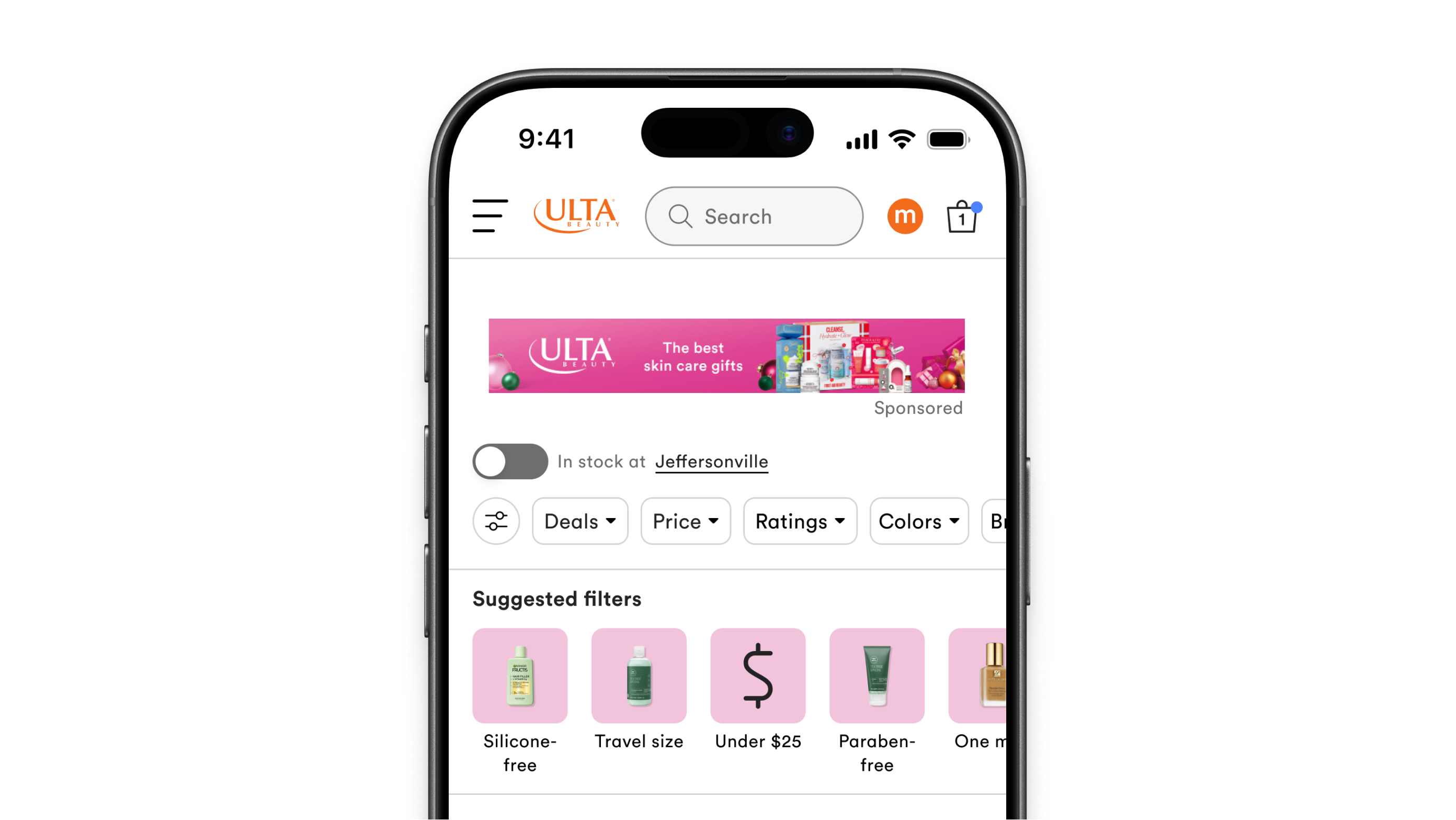
Ulta Beauty search results with the filter and guided navigation rail

Role & Team

Led design, research & strategy

Collaborated with the engineering lead, data analytics, and our 3rd party tool’s anchor.

Impact

+51M incremental ARR

Only 1% of shoppers use the filter rail. Those shoppers convert at 6.4x the baseline and bring in $47.4M a year. I mapped the gap, built the case, and designed the engagement fix. At 2%: +$51M*. At 5%: +$168M.*

*Estimation

Problem

The suggested filters experience didn’t surface relevant filters. As a result user engagement was low.

When it was engaged with, the suggested filters conversion numbers were great!

Goal

Investigate and recommend changes to the suggested filters experience.

Originally tasked to “supercharge” the discovery experience, I focused my attention on the filter rail’s high conversion but low engagement.

Context

Ulta Beauty’s core filters live within an overlay, some of which are surfaced in an always-visible rail.

The filters surfaced in the rail are a combination of core filters + generated filter keywords scraped from the page that have a high likelihood of clickthrough.

Due to the search engine’s more limited keyword search capabilities, user search behavior consisted mostly of short one word queries (e.g. “conditioner”). Users didn’t trust the search engine with longer intelligent searches, but instead refined large search results with a bunch of filters.

I spent 2+ years on Ulta’s search & filters team.
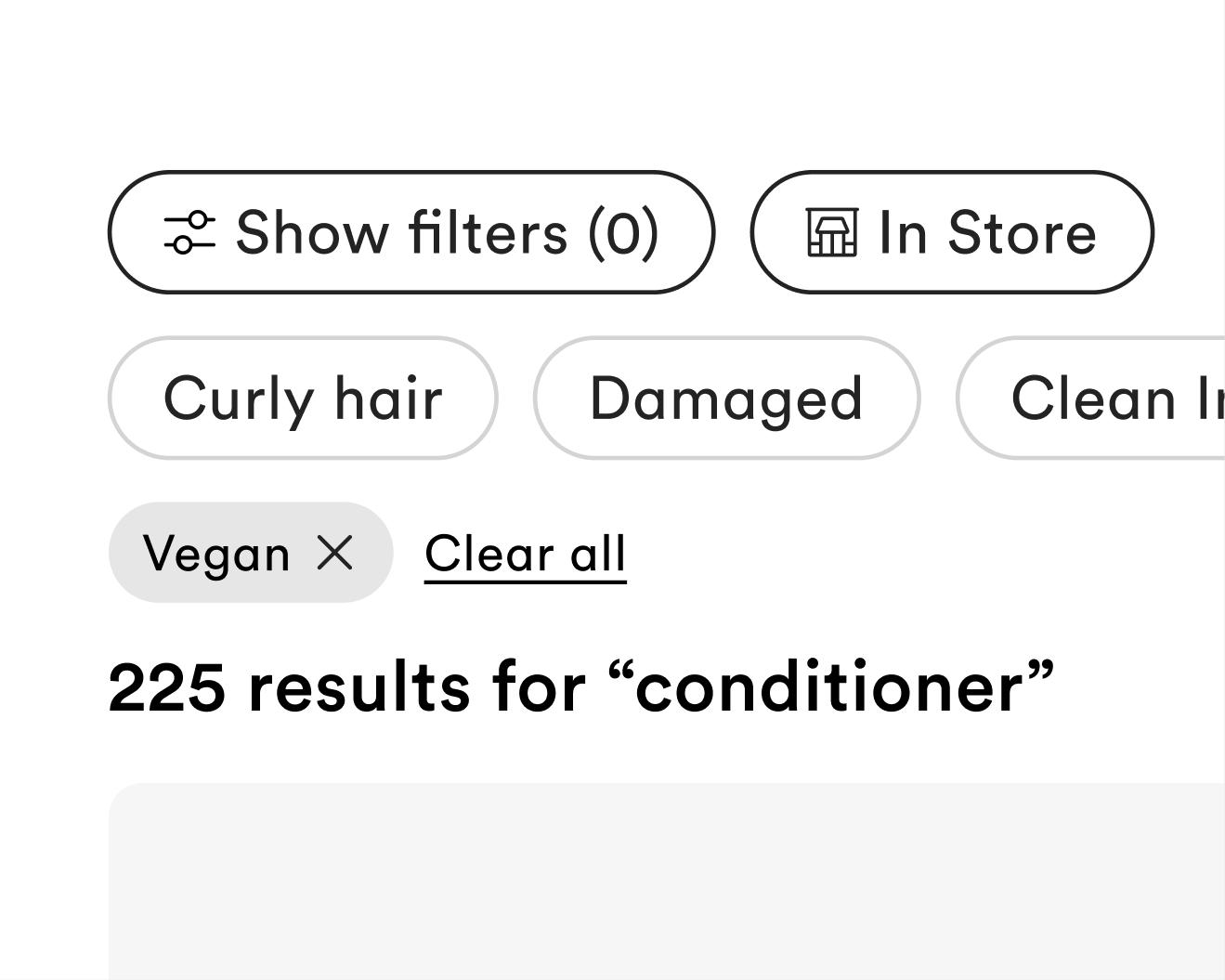
Filter rail showing applied filters and result count for a conditioner search

Discovery

Baymard best practices, competitive research and internal deep dives informed the solution to the problem.

Research spanned Baymard Institute’s filter and navigation guidelines, competitive analysis of beauty e-commerce, and a review of existing internal research. On the quantitative side, I partnered with our analytics team to pull current filter usage and conversion data.

The most revealing work came from a series of deep-dives with the developer managing the third-party guided navigation tool. These meetings brought to light the mechanics of the suggested filter rail and it was in those meetings that I uncovered the CTR/Conversion optimization issues.

Key Finding #1

Only 1% of shoppers engaged with the suggested filters rail. However, those shoppers converted at 6.4x the baseline rate.

The shoppers that engaged with the suggested filter rail also spent more. Average order had 42% larger baskets!

Key Finding #2

The tool was built to optimize for click-through-rate rather than conversion.

The highest clicked filter pill was moved to the far left of the rail, into a prime position for more clicks. The first position filter was used to halve the number of results presented to the user. The system could not detect query intent nor could it be optimized to do so easily.

Key Finding #3

Users did not engage with the suggested filters because the filters were not relevant to their goal.

Users weren’t converting with the tool because users weren’t engaging selectively with the irrelevant filters. Instead, users went on “filter sprees” clicking the first filters in the rail haphazardly just to reduce the amount of relevant results and overwhelm.

Solution

A conceptual redesign of the filter rail for a more relevant and useful experience.

The top main rail included the filters necessary for most tasks: deals, price, ratings, colors, brand and size. The dynamic rail filters rail was present in select journeys where hyper-relevant filters could be selected to narrow the result set intelligently.

The component was built with flexibility in mind. Dynamic filters could live on any filterable page.

The original filters rail was built with the singular purpose of cutting the result pool in half. Filter suggestions were ranked by click-through rate. whichever filters got the most clicks rose to the top, regardless of whether they helped shoppers find what they were looking for. The redesign shifts the purpose of the suggested filters from click through rate to conversion.

The default and selected state of the main filter rail.